

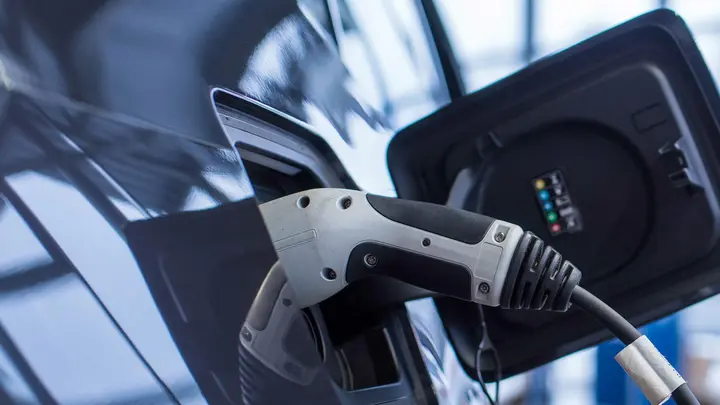
Photovoltaics and eMobility
We support local authorities, businesses and property owners in making cost-effective use of solar power and integrating e-mobility in a practical way. We identify opportunities, develop robust concepts and support their implementation right through to the operational phase.
Photovoltaics and e-mobility are key components of the future of energy. However, it is not the technology alone that is crucial, but rather its effective integration into buildings, sites and operating processes. Solar power must be used where it is generated, consumed, stored or converted into mobility.
We assess potential, compare options and develop concepts that combine technical feasibility with cost-effectiveness. In doing so, we consider production, consumption, charging infrastructure, storage options and personal consumption as a whole.
This results in solutions tailored to each specific situation: from individual buildings and sites right through to municipal or company energy planning. Where appropriate, we combine photovoltaic systems with pooling for personal consumption [ZEV], virtual pooling for personal consumption [vZEV] or billing solutions to ensure that the electricity generated can be utilised efficiently from an administrative perspective.
Benefits at a glance
- Potential analysis and feasibility study for photovoltaics
- Design of PV systems, storage options and charging infrastructure
- Economic assessment of production, consumption and personal consumption
- Integration with pooling for personal consumption [ZEV], virtual pooling for personal consumption [vZEV] solutions and billing
- Support from the preliminary assessment right through to implementation and operating perspective
How can photovoltaics be combined with e-mobility?
Photovoltaics is a science and one of the most important technologies through which the energy transition can be realised. It enables solar energy to be converted into electrical energy. This means that photovoltaics also plays a central role in e-mobility. Experts at Rapp are more than happy to advise you on the many options offered by renewable energies in e-mobility.
This also includes using solar power to charge electric cars. In addition to reducing energy costs, this also reduces the CO₂ footprint, thus protecting the environment. Another interesting solution is bidirectional charging. This involves the battery of an electric car feeding the charged electricity back into the power circuit. The battery therefore acts as an intermediate storage medium.
Solar power is generated using photovoltaic systems, these being available to both private households and companies of all sizes. We precisely plan aspects such as the number of solar modules in order to cover individual electricity requirements.
How can Rapp help to analyse and evaluate the photovoltaic potential of a site?
Rapp offers a range of services to assess the potential of photovoltaics for specific locations. For example, we conduct feasibility studies to ascertain whether a photovoltaic system will be fully effective at the planned location.
We also analyse the intensity of solar radiation. In addition, we investigate structural conditions if the system is to be installed on the roof of a building. This may result in the necessity to plan and realise a ground-level system.
A comparison of variants enables us to ensure that the PV system meets the needs of our customers. We also scrutinise the economic efficiency of the system. We calculate the electricity requirements of the household or business and determine when the system will have amortised.
We also support a self-consumption merger (ZEV) through planning, tariff classification and contract management and on to ultimate implementation.
What technical solutions does Rapp provide for the combination of photovoltaics and e-mobility?
With Rapp, you can, for example, create your own photovoltaic system to generate free electricity. In financial terms, the investment in the system and regular maintenance are the only cost items that you need to take into account. We plan the system and, in addition, also install it on request.
The installation of an intelligent PV system is a sensible decision. It distributes surplus electricity to consumers who need it, such as electric cars or heat pumps. It also ensures that surplus electricity is stored for later use. Another option is to feed unneeded electricity into the public grid.
The self-consumption model also enables us to determine the demand and make suggestions as to how it can be optimised.
We are also happy to assist with the commercial use of photovoltaic systems. We provide you with technical and economic advice if you are planning to operate charging stations for e-mobility.
How does Rapp help with applications for funding programmes and subsidies for photovoltaic projects in Switzerland?
The federal government, cantons and municipalities support photovoltaics in Switzerland through a variety of subsidy programmes. We support you during applications for funding by, for example, informing you about available programmes. We are also happy to assume responsibility for the application and control of subsidies.
Some subsidy programmes also support the energy-efficient refurbishment of properties. We draw up the concept to be submitted with the funding application. If desired, we can then support the renovation or realise it ourselves. You benefit from the interdisciplinary composition of our team and receive all services from a single source.
Optimum planning is important for both the installation of a photovoltaic system and energy-efficient refurbishment. This minimises the risk of a poor investment.
What can Rapp provide in the field of e-mobility?
Rapp offers a wide range of services in the area of e-mobility. Businesses, for example, can avail themselves of our e-fleet management. We first determine the vehicle requirements in this respect. On this basis, we create a concept that determines which e-vehicles and how many best suit requirements. We take factors such as power consumption and charging capacities into consideration.
It must also be ensured that the vehicles in the e-fleet can always be charged. To this end, we plan efficient charging stations in combination with photovoltaic systems. Carports with solar panels installed on the roof are one clever solution in this respect.
Our services also include the development of intelligent strategies for charging electric cars. It is important that sufficient options are available when it comes to supplying the vehicles with electricity, depending on the size of the fleet. Intelligent charging stations that store surplus electricity are among the useful solutions available to achieve this. This power can then be used when sunlight diminishes.
Even if your company or household is unable to generate its own electricity, we at Rapp can help with a range of practical services. For example, we determine how existing electric vehicles can be supplied with cheap green electricity. This saves you money and, simultaneously, makes an important contribution to environmental protection.
We can also advise you on how your driving can be as climate-neutral as possible. We provide you with advice on how to effectively reduce your carbon footprint through e-mobility.
Related area of activity
Energy and water measuring systems
Reliable billing starts with reliable measurement data. We design, install and operate energy- and water-measuring systems that accurately record consumption data and make it available for billing, monitoring and optimisation.
Energy concepts for local authorities and sites
We show local authorities, property owners and site operators the economically viable path to a sustainable energy supply. We examine options, assess costs and benefits, and provide the basis for decisions to ensure realistic implementation.
Energy monitoring and operational optimisation
Rapp highlights how energy is used within operating processes and where improvements can make a difference. Through analysis, monitoring and specific measures, we help owners and operators manage their energy consumption, costs and performance in a transparent manner.
Pooling for personal consumption [ZEV], virtual pooling for personal consumption [vZEV] and local electricity co-operative [LEG]
We make personal consumption models manageable for property owners, property management companies and site operators, both technically and administratively. We combine photovoltaics, consumption data and billing to create a solution that works in practice.