Verkehrsmodell Kanton Thurgau

Mobility

Transport Model of the canton of Thurgau (VMod TG)

The canton of Thurgau commissioned Rapp AG to develop a new macroscopic traffic model that would enable the canton to calculate its own forecasts, allowing it to quantify how the traffic in the canton is impacted by the effects of demographic evolution, land use development, as well as transport supply.
Verkehrsmodell Kanton Thurgau

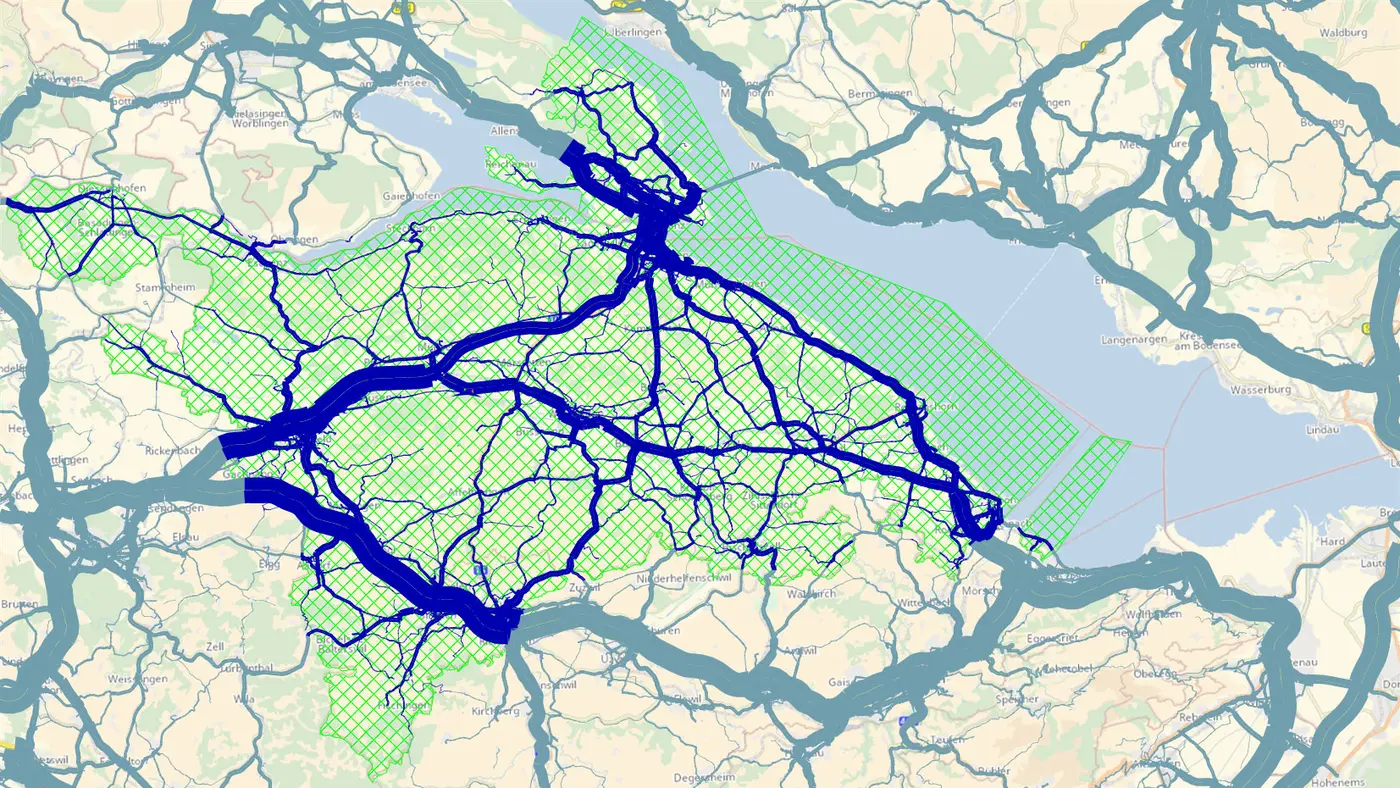
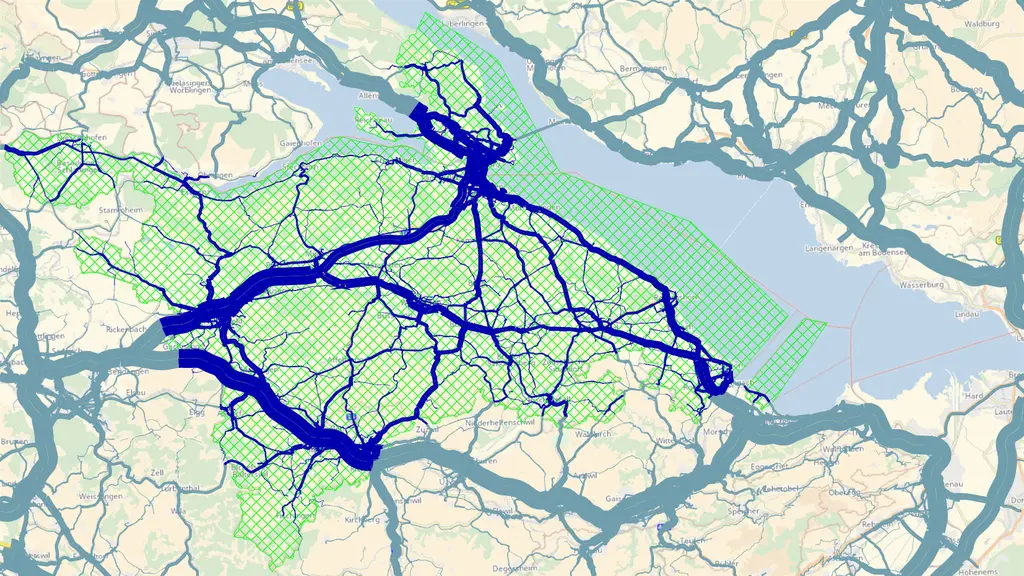
Map of road traffic flows in the Thurgau model.
Model architecture

The model created by Rapp (“VMod TG”) depicts 2019 as the base year plus two forecast scenarios for 2040 and 2050. Demand in the model covers all modes of private transport (public transport, cars, walking, and cycling) as well as freight and delivery vehicle traffic. The model is capable of calculating traffic volumes on roads and on the public transport network. 

The model results are differentiated according to average weekday traffic (AWDT), average daily traffic (ADT), and morning and evening peak hour traffic (AM, PM). The VMod TG is based on PTV Visum software. The chosen architecture of the Thurgau traffic model is both a refinement and an extension of the National Passenger Transport Model (NPTM). The basic structure of network models and demand calculation is based on the NPVM. 
 

Verkehrsmodell Kanton Thurgau

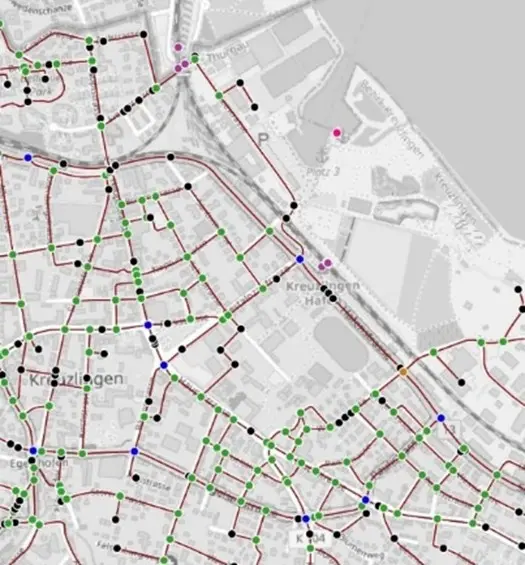
Feinstruktur von Knoten und Strecken im Netzmodell

Implementation

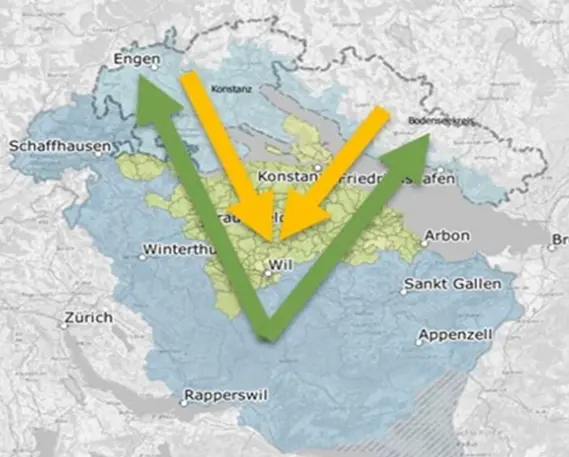
The model area comprises two sub-areas – one of Switzerland and one of Germany. The endogenous model area (a.k.a. planning area) includes the the canton of Thurgau plus the municipalities of Will (canton SG) and Konstanz (Germany). The extended model area ( a.k.a. study area) covers several neighboring districts in other cantons. The zone system has been greatly refined compared to the NPTM in order to achieve a higher resolution. The model comprises a total of 1,700 zones. They function as origins and destinations of all travel in the model. No zone has more than 1,000 inhabitants. The network has been refined to correspond to the extensive granularit of the zones. Hence, the road network includes even the attributes of intersections, which allows for calculation of intersection delay differentiated by turn direction, road hierarchy, and traffic volume.
 

Verkehrsmodell Kanton Thurgau

Darstellung des grenzüberschreitenden Verkehrs (Grenzpendler: gelb, Einkaufsverkehr: grün)

Results

The model calibration achieved all quality indicators defined in advance between the client and Rapp AG. The final model produces not only travel demand within Switzerland, but also cross-border mobility. Its most important segments are border-crossing commuters (living in Germany and working in Switzerland) and shopping trips (living in Switzerland and shopping in Germany). Thanks to this segmentation the model takes the specific situation of the canton of Thurgau into account.