What are the main goals of traffic planning?
The goals of traffic planning are manifold. It includes the following in particular:
- Development of local traffic infrastructure
- Renewal of traffic routes
- Redesign of traffic routes
- Development and implementation of strategies for optimising traffic
- Increasing road safety
Rapp offers a range of services in traffic planning support, such as the creation of mobility strategies. We also develop transport models to identify weak points in current planning. Such problems can ultimately be rectified through suitable measures – which we are also pleased to develop.
Our traffic planning team are experts in this field, with many years of experience. We consider not only the planning and transport objectives, but the economic aspects too, as well as the societal perspectives.
Ecological factors are also of great importance. We are committed to the development of sustainable traffic and transport concepts. This work helps to reduce emissions and protect the environment.
As an interdisciplinary company that specialises in architecture, infrastructure, mobility, logistics and energy, we contribute our expertise in all areas. In this way, we develop solutions for sustainable, economical, efficient and safe transport systems for the future.
What factors are taken into account in traffic planning?
There are many factors in traffic planning which make it an extremely challenging field.
The main focus is on traffic volume and the utilisation of junctions and roundabouts. In many urban areas, the situation for motorists has become critical. Traffic jams and slow-moving traffic have become more frequent due to suboptimal road utilisation. Motorways and highways are subject to congestion too. This can be avoided with effective planning.
The number of available parking spaces is also quite important, as this is a serious problem in cities. Every day, countless motorists are looking for a parking space for their vehicle. This causes frustration, but also increased fuel consumption, a significant environmental impact and an avoidably high volume of traffic.
Solutions – for example, by directing drivers to free parking spaces – will automatically have an impact on traffic volumes in urban areas.
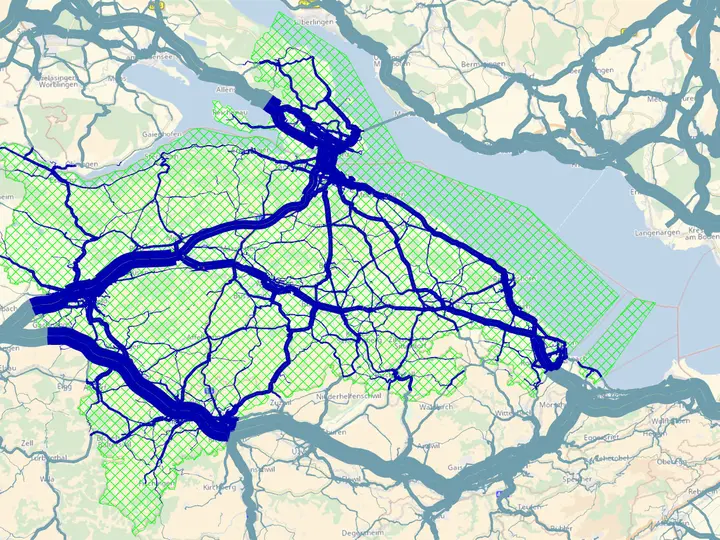
At Rapp, we use various tools to analyse traffic situations. Simulation tools are particularly helpful in determining the actual conditions. They can also check the impacts of certain measures. They help us to assess which steps will have positive effects on the traffic situation.
Traffic models and surveys also help to review the actual as well as the desired conditions. We use the appropriate instruments for analyses, depending on the objective. We are pleased to share our expertise in traffic and transport planning. Do not hesitate to contact us.
What role does traffic and transport planning play in reducing road congestion?
The reduction of congestion is the most important task in traffic planning. After all, the number of road vehicles in Switzerland is constantly increasing.
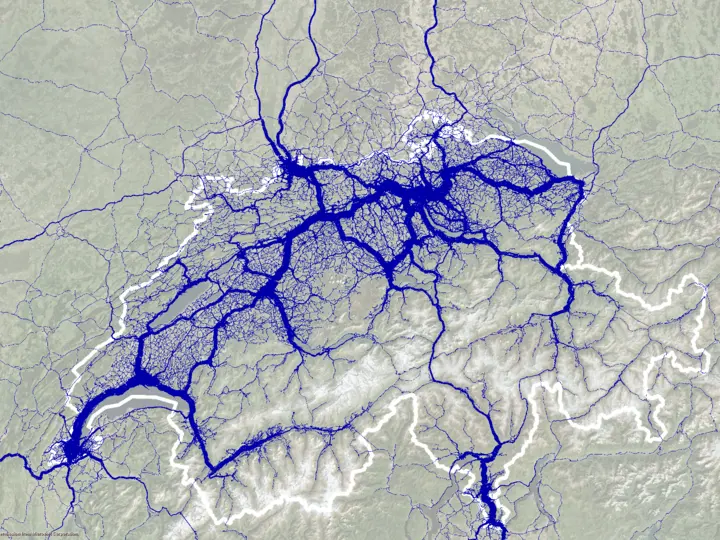
Rapp's services in traffic planning include the use of models to identify bottlenecks. We also use targeted surveys and simulation tools to determine where traffic congestion is most likely to occur.
We use these tools to analyse current conditions as well as to estimate how the situation will change after different measures are implemented. Naturally, we can also develop and implement these measures.
Traffic jams are a constant problem, especially in cities. They cause poor air quality and wasted time for motorists. Reducing congestion helps both the environment and the economy. Our services support urban planners in their work to improve traffic flow.
How is traffic and transport planning coordinated at the regional and national level?
There are a variety of instruments used in traffic and transport planning. Their use depends on whether the planning activity occurs at the regional or national level.
At national level, sectoral planning comes into play. It takes into account the individual parts of the infrastructure – traffic on roads, railways, waterways and in the air. Sectoral planning involves looking at the big picture and setting goals and strategies.
Regional planning involves structure plans and zoning plans. These are implemented by both the cantons and municipalities. In cities, agglomeration plans are used to prevent planning from stopping at the city limits.
At Rapp, we are happy to take on your traffic and transport planning requirements. Our services include:
- Development and optimisation of traffic systems
- Monitoring and analysis of the effects of traffic measures
- Cost-benefit analyses
- Evaluations
- Traffic surveys, traffic counts and data analyses
Please contact us to find out how we can be of assistance to you.