

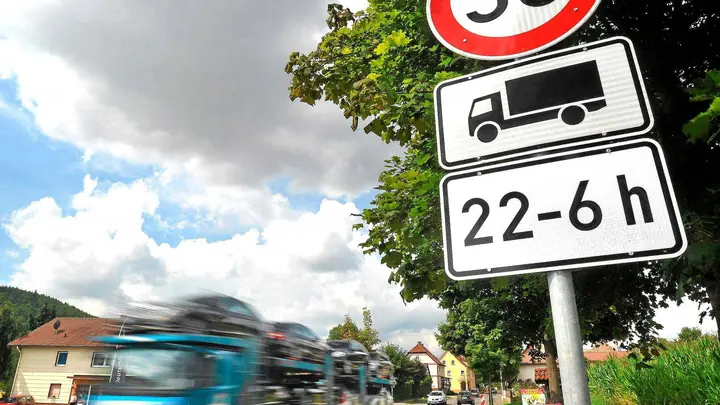
Traffic generates noise and affects the quality of residential and natural environments. We investigate the impacts of traffic noise and develop targeted measures to reduce noise emissions. In doing so, we regard noise abatement as an integral part of infrastructure and mobility projects.
Our services include acoustic investigations, noise mapping and the development of noise action plans, ranging from individual projects to area-wide or inter-municipal assessments.
We analyse causes, assess the impact on those affected and identify concrete options for action. Depending on the project, we combine different approaches and evaluate the use of suitable tools such as traffic and noise models, GIS and digital forms of public engagement.
We consider the involvement of those affected and relevant stakeholders to be a key aspect. To this end, we can draw on our extensive experience with various forms of public engagement.
Our aim: sustainable transport solutions that harmonise the environment, people and the economy.
Downloads
What does noise protection mean in the context of mobility?
When it comes to the planning of roads, noise protection is an issue with great potential for conflict in the public eye. Noise pollution from road traffic is one of the most significant sources of environmental noise. That is why Rapp develops innovative and customized solutions for low-noise residential areas and natural areas.
Cars, motorcycles, lorries, buses and other vehicles generate a considerable amount of noise in road traffic. Railways also cause high noise levels. People who are exposed to this high noise level over long periods of time suffer particularly from it. Traffic noise can have the following health consequences:
- Stress reactions
- Sleep disorders
- Impaired concentration and performance
- Irritability, nervousness, tension
In the long term, road noise can lead to hearing damage, cardiovascular diseases and anxiety disorders. Noise protection measures are therefore particularly necessary when roads run through congested areas.
After detailed analyses, the experts from Rapp propose suitable noise protection measures. Strategic noise maps and impact analyses help here. The consequences of building a road are determined and possible ways of minimizing them are examined for this purpose. Active measures such as noise barriers along with passive measures including structural alterations to buildings are possible.
What legal requirements apply to noise protection?
When developing suitable noise protection measures, the experts at Rapp naturally take the legal requirements into account. The following standards and directives are particularly relevant:
- 16th Federal Immission Control Ordinance (BImSchV)
- 18th BImSchV
- DIN 18005
- Technical Instructions on Noise Protection (TA Lärm)
- Environmental Noise Directive
DIN 18005 "Noise protection in urban development" specifies, for example, the noise levels that road traffic must not exceed. This stipulates that in purely residential areas, noise levels must not exceed 50 dB during the day and 40 or 35 dB at night. In parks and cemeteries, the volume must never exceed 55 dB.
The Technical Instructions on Noise Protection (TA Lärm) also specify limit values for noise generated by road traffic. Among other things, it also defines how it should be measured.
What is the difference between active and passive noise protection?
A distinction is made between active and passive noise protection measures. The specialists at Rapp find the right individual solution on the basis of detailed analyses.
Active noise protection refers to measures that are installed directly at the source of the noise or along the propagation path. They serve to prevent or reduce the propagation of noise before it reaches residents or passers-by. Active noise protection is intended to reduce noise for all people and animals. Here are a few examples:
- Installation of noise barriers along roads or railway lines
- Use of low-noise road surfaces
- Enforcement of speed limits in the area concerned, e.g. 80 km/h on the motorway or 30 km/h in the city centre
- Restriction of heavy goods traffic to certain times of day
One far-reaching measure is the creation of bypass roads. This ensures that the traffic volume is better distributed, thereby also reducing noise levels.
Passive sound insulation measures are implemented on buildings or in rooms to prevent noise from entering from outside. Their task is therefore to block out the noise that is still present. Such measures have a selective effect. Examples include:
- Insulation of facades
- Installation of soundproof windows and airtight doors
- Installation of special ventilation systems that prevent noise from entering the house
Does Rapp also support local authorities in noise action planning?
Needless to say, Rapp supports local authorities in noise action planning. Our experts provide various services in this area. They range from the creation of simple sample plans to complex procedures in inter-municipal co-operation.
At our location in Freiburg in southern Germany, we develop customised measures that enable local authorities to reduce their traffic noise in an effective manner. We have implemented more than 50 noise action plans in all four administrative districts of Baden-Württemberg in Germany.
One specific example of our noise protection services is the project that we have been supporting in the municipality of Baiersbronn since 2022. The municipality requested our expertise for its "Aue" development plan. New residential developments are to be realised, and a park-and-ride facility and a special area for events are also to be created.
Our team was commissioned to prepare an acoustic expertise for the project and to make recommendations for measures. Above all, there was concern that the additional traffic caused by the park-and-ride facility would potentially generate a lot of noise – as would the fairground.
It became apparent that the park-and-ride facility does not cause any significant noise pollution. Only a few buildings are affected by the additional traffic, but these can be protected with passive noise protection measures. Our team also determined that activities on the fairground could cause excessive noise levels at times. We suggested to the municipality that the loudspeakers be strategically positioned and the event times adjusted.
Which projects are particularly relevant for noise protection?
Noise protection plays an important role in infrastructure projects involving the construction of roads and/or railways. It also comes into play in urban developments such as building developments and subsequent compaction.
However, noise protection applies not only to road traffic, but also to other sources of noise. These include leisure events such as concerts and sporting events as well as commercial noise. The combination of in-depth analyses, expertise and experience enables Rapp to find suitable noise protection measures for all situations.
Related area of activity
Building Physics and Acoustics
Consideration of structural noise and heat insulation is an inherent part of designing a building, and something we include in every project.
Environment
Our experience ensures that environmental concerns are always taken into account in accordance with statutory regulations and ecological requirements.
Traffic Planning
Designing sustainable, economic, efficient and safe traffic systems for the future is a comprehensive responsibility for traffic planning that we are happy to take on.